

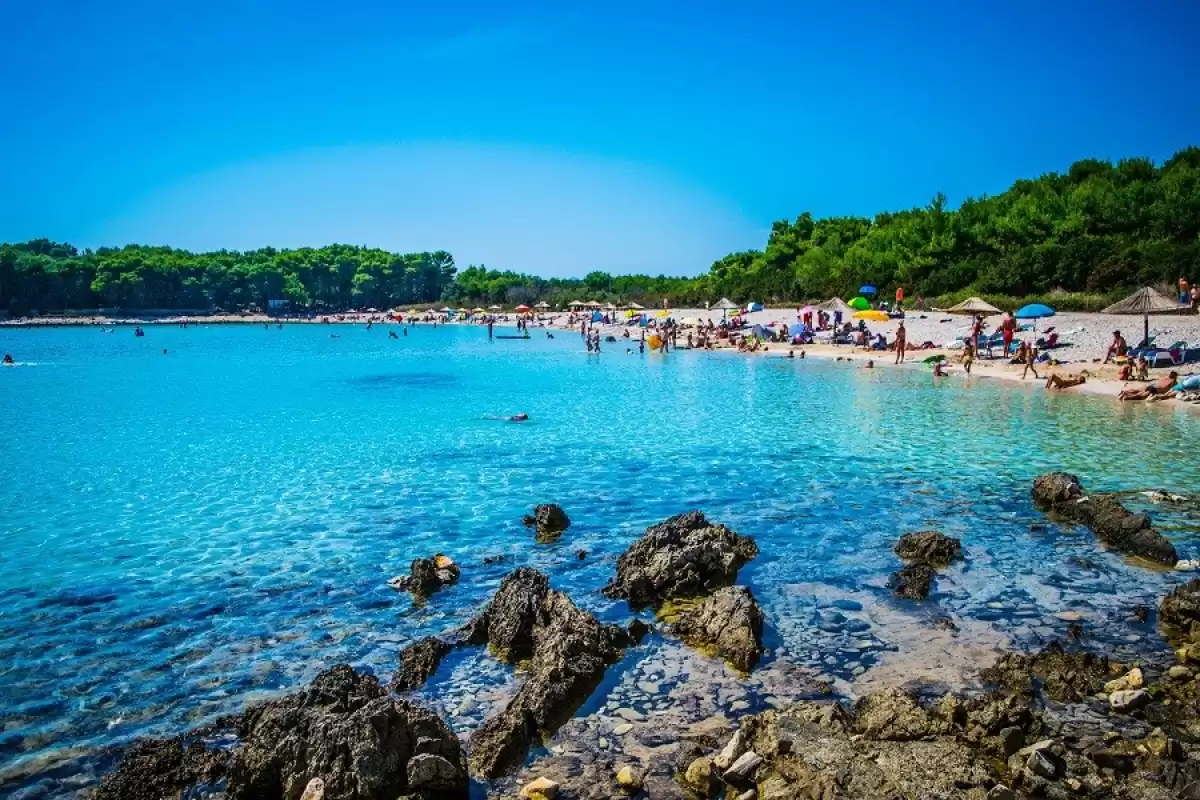

Sakarun is one of the most famous beaches in Zadar County, located on the northwest coast of the island Dugi otok. Near the beach are the places Veli Rat, Veruni, Soline and Božava.
Sakarun Dugi Otok in 60 Seconds
- What it is: A sandy bay with shallow, crystal-clear water on the northwest coast of Dugi Otok.
- Why it’s special: Fine light sand + shallow seabed = that signature turquoise glow.
- Best time: June and September for fewer crowds; in July/August arrive before 10:00.
- How to reach: Car ferry (Gaženica → Brbinj) or catamaran (Zadar port → Božava), then a short drive/bus ride.
- Good for: Families, relaxed swimmers, anyone who wants a low-effort beach day with high reward.
Why Sakarun Dugi Otok Feels Different from Most Croatian Beaches
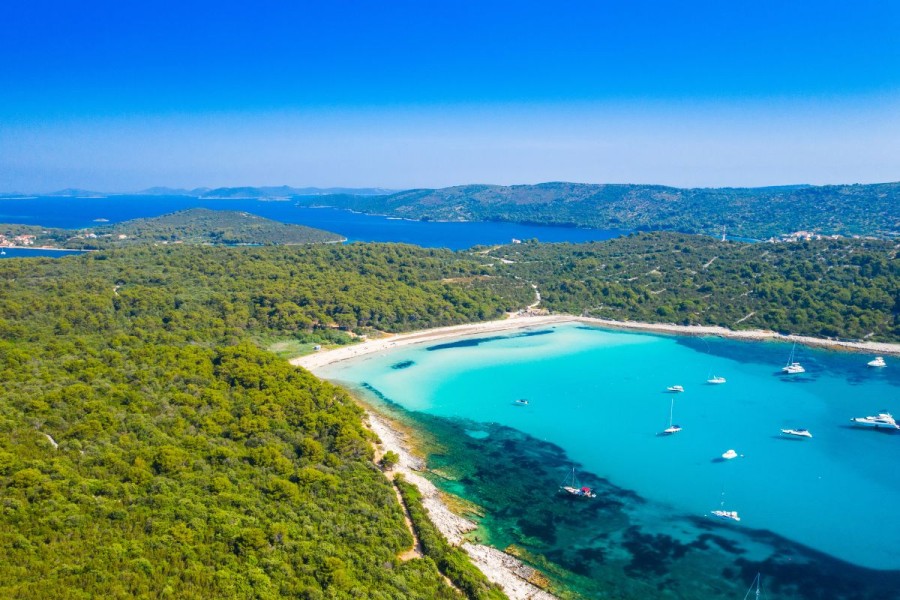
Croatia is known for pebbles and rocky coves. Sakarun Dugi Otok is the exception people talk about because it delivers a genuinely sandy, shallow bay, something you don’t find everywhere along the Adriatic. The beach sits in a calm setting, framed by pine trees that offer natural shade in summer.
That combination—soft, light sand and shallow water—creates the “turquoise glow” effect people associate with Sakarun. It’s also what makes the beach feel especially easy for families: you’re not stepping onto sharp stones, and you’re not immediately in deep water.
Sakarun doesn’t feel special because it’s trendy. It feels special because it’s rare: a sandy bay on an otherwise rocky coastline, simple, photogenic, and surprisingly relaxing when you time it right.
How to Reach Sakarun Dugi Otok from Zadar
Your route depends on one thing: are you bringing a car? With a car, you’ll typically use the ferry route to Dugi Otok and drive toward the northwest coast. Without a car, the passenger catamaran to Božava is a common choice, followed by local transport. If you want minimal planning, a boat tour can take you directly to the beach area.
Transport Options
| Transport | Depart (Zadar) | Arrive (Dugi Otok) | Best for | Time |
|---|---|---|---|---|
| Car ferry | Gaženica Port | Brbinj | Freedom to explore, families, beach gear | ~1 h 40 min |
| Catamaran | City Peninsula Port | Božava | Fast crossing, day trips without a car | ~70 min |
| Boat tour | Varies | Sakarun (direct) | Low-stress planning, curated stops | Full day |
Many visitors choose to experience Sakarun as part of a wider island day, the Sakarun Beach Full Day Boat Tour from Zadar combines the beach with additional Adriatic highlights without the need for separate planning.
Best Time to Visit Sakarun Dugi Otok
The beach itself doesn’t change, your experience does. On Sakarun Dugi Otok, the biggest swing factors are crowds, sea temperature comfort, and wind. If you want the beach to feel spacious and calm, timing matters more than any other “hack.”
June: Calm(er), Fresh-But-Comfortable Water
June is when Sakarun Dugi Otok starts to feel like peak summer without acting like it. Days are long, the island is awake, but it’s typically less crowded than July and August. Sea temperatures in the Zadar area in June average around the low 20s °C, which many people find comfortable for swimming, especially on sunny days.
July: Warm Water, Peak Energy
July usually delivers consistently warm swimming conditions and the classic summer atmosphere. It’s also when the “day tripper wave” becomes a real factor. If your goal is a peaceful Sakarun Dugi Otok, July can still work, just treat timing as part of the plan, not an afterthought.
August: Warmest Water, Busiest Feel
August is typically the warmest sea month in the Zadar region, which is great for long swims. It’s also the height of the season. If you like a lively beach day, you’ll love it. If you want quiet, you’ll need to lean on early/late timing and pick your spot carefully.
September: The Sweet Spot
September is a strong contender for the best Sakarun Dugi Otok experience: fewer crowds, still-warm sea, and a calmer rhythm on the island. Average sea temperatures in the Zadar area are often still in the low-to-mid 20s °C early in the month, which keeps swimming comfortable while the beach feels more breathable.
What About Wind?
Along the Adriatic, bura (bora) is a cold, gusty northeasterly wind most associated with cooler seasons, but it can occur outside winter too. If a windy day hits, it can change the feel of your beach day quickly: the sea can feel sharper, and the atmosphere can flip from “lazy summer” to “pack up early.” Quick rule: if the forecast signals strong bura, plan flexibility.
If you want Sakarun Dugi Otok to feel like the photos, don’t chase a date, chase conditions: warm sun, lighter winds, and a time of day when the beach isn’t in “rush hour.”
On-Site Facilities and What to Bring
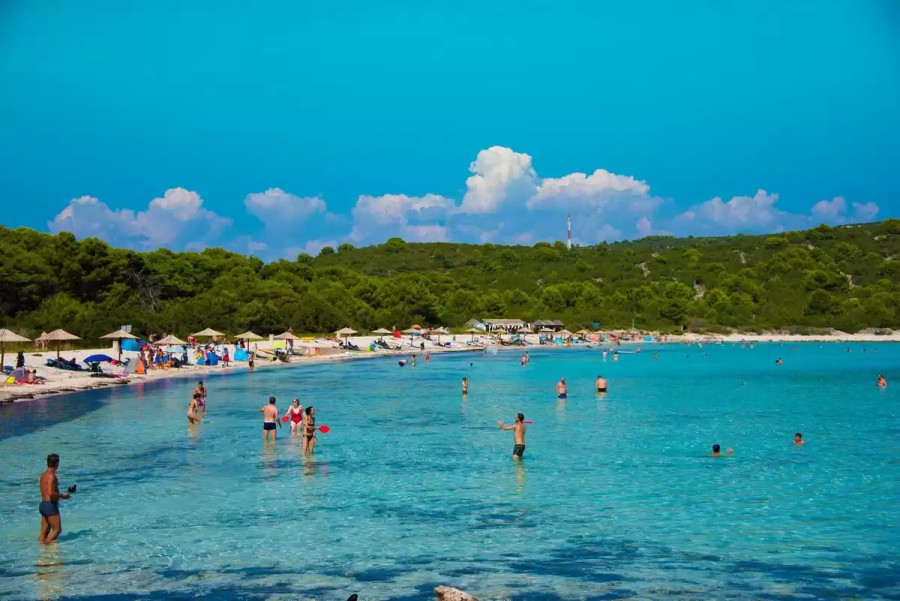
Sakarun is beautifully natural, but thankfully it’s still equipped with some essential comforts to make your day completely hassle-free. During the summer months, you'll find a couple of charming little beach bars where you can grab a cold drink, an ice cream, or a simple grilled lunch.
You'll also find basic toilet facilities available. If you're driving, there's a designated car park tucked away just behind the pine forest. Expect a daily fee. From the car park, it’s just a short, pleasant walk through the trees to the shore.
A word of advice: always bring some cash. The beach bars are small, local operations and they don't always take cards. Having cash on hand means you can easily pay for parking, snacks, or that much-needed refreshing drink without any fuss.
To make your day completely seamless, a well-packed beach bag is your best friend. Don't leave home without these essentials:
- Sun Protection: This is non-negotiable under the Adriatic sun. Pack a high-SPF sunscreen, wide-brimmed hats, and a good pair of sunglasses.
- Plenty of Water: You have to stay hydrated, as the summer heat can be pretty intense. Bringing your own bottles is smart for your wallet and the planet.
- Snacks: While you can buy food, having your own stash is great for convenience, especially if you've got kids or specific dietary needs.
- Cash: As I mentioned, it’s crucial for smaller purchases at the beach bars and for paying the parking fee.
- Water Shoes: The seabed is mostly pure sand, but you might find some smooth pebbles near the edges. Water shoes can be handy for exploring those areas comfortably.
With these simple tips in your back pocket, your day at Sakarun on Dugi Otok is guaranteed to be just as relaxing and picturesque as you've imagined.

Beach Layout: Where to Sit on Sakarun Dugi Otok
Sakarun is often described as a shallow bay with pine trees nearby, and that detail is not just aesthetic, it’s practical. Your comfort level depends heavily on whether you set up closer to natural shade or in open sun.
Pine Shade vs. Full Sun
The pine trees around Sakarun Dugi Otok can provide welcome shade during hot summer days. If you’re visiting in July or August, shade becomes a “quality of life” upgrade, especially for families and anyone staying longer than a quick swim.
The Family-Friendly Zone
Because the bay stays shallow and calm in many conditions, families often gravitate to the most accessible, central areas. If you’re with kids, that’s a benefit: easier entry, easier supervision, easier breaks. If you want a quieter feel, walking slightly away from the most obvious entry points can make the beach feel significantly calmer.
Want a Quieter Spot?
Sakarun’s popularity means the “middle” tends to fill first. A simple strategy is to avoid the most central, high-traffic area and look for space a bit to the sides. You’ll often get the same water quality with a more relaxed atmosphere.
What to Do at Sakarun Dugi Otok Beyond Swimming
Sakarun is primarily a “swim + relax” beach and that’s exactly why it works. Beyond that, the most reliable add-ons are simple and low-risk: short walks, enjoying the pine shade, and taking your time in the shallows.
- Easy exploring: Walk along the bay and look for calmer corners away from the busiest center.
- Slow-time activities: Long swims, floating, and “doing nothing” under pine shade (this is the point).
- Photography timing: Softer light in the morning/late afternoon tends to flatter the water color and reduces harsh shadows.
Common Mistakes People Make at Sakarun Dugi Otok
Mistake #1: Treating Sakarun Like a Quick “Stop”
Sakarun Dugi Otok looks like a simple beach on a map. In reality, it’s a destination that rewards a slower approach. People who rush in and out often leave thinking, “It was nice, but overrated.” Usually, the beach wasn’t the problem, timing and expectations were.
Mistake #2: Ignoring Season Reality
July and August can be crowded. That doesn’t mean you shouldn’t go, it means you should plan for peak conditions. If you want a calmer version of Sakarun Dugi Otok, June and September are often the better call for atmosphere.
Mistake #3: Forgetting Shade and Water Logistics
On a pale sandy beach with strong sun reflection, heat builds fast. People underestimate how much shade and hydration matter, then spend half the day managing discomfort instead of enjoying the bay.
The best Sakarun days aren’t “lucky.” They’re planned: the right month, the right wind, and a setup that keeps you comfortable long enough to actually relax.
FAQ: Sakarun Dugi Otok
Is Sakarun Dugi Otok really sandy?
Yes. Sakarun is widely known for its pale sand and the rare “sandy beach” feel compared to most of Croatia’s pebbly coastline.
Is Sakarun Dugi Otok good for families?
It’s considered very family-friendly thanks to shallow water and a sheltered bay feel. Many visitors highlight the calm, shallow swimming conditions.
Can you drive right up to the beach?
Almost! You can drive your car on Dugi Otok and park in a dedicated car park just a stone's throw from the beach. To do this, you'll need to catch a car ferry from Zadar's Gaženica port to Brbinj. Once you land on the island, it's a beautiful 20-minute drive to the Sakarun parking lot. From there, a short, lovely stroll through a pine forest leads you straight onto the sand.
Are there restaurants or toilets at Sakarun?
In the peak summer months, you'll find a couple of charming beach bars and simple restaurants (known locally as konobas) right on the beach. They're perfect for grabbing cold drinks, ice cream, and some basic but delicious grilled meals.
Just a heads-up: the options are pretty limited, especially outside of July and August. It's always a smart move to bring your own water and a few snacks, just to be on the safe side.
When is the best time to visit Sakarun Dugi Otok?
For fewer crowds with still-warm sea, June and September are often ideal. July and August deliver the warmest water and classic summer atmosphere—but also the busiest feel.
Does bura affect a beach day at Sakarun?
It can. Bura is a strong, gusty northeasterly wind associated mostly with colder seasons, but it may occur at other times too. When it hits, it can change sea feel and comfort quickly, so it’s smart to watch the forecast.
Sakarun Dugi Otok is at its best when you plan for what actually shapes the experience: month, wind, and where you sit. If you want to extend the day into a broader island plan, link out to your Top Things To Do on Dugi otok and keep this page focused on what it does best: making Sakarun easy and worth it.